AI in Education: How It's Shaping Your Child's Learning
-
Admin
-
 30 Jul, 2026
We have noticed that many parents get slightly cautious or hesitant the moment "AI" or "technology" becomes part of a discussion on a child's education in school. This reaction is justified. Most of what parents hear from experts on AI in education is sensational news or just general advice, very rarely both together. Thus, we decided to get some facts – information from the government, the experience of other schools, real threats and our own thoughts and beliefs.
Let's start by clarifying common terminology used in education.

Smart technology is not a replacement for a child's teacher by an android or a chatbot that will do homework instead of them. In an educational environment, it may be called software that analyses patterns of learning, highlights areas of decline, and saves teachers time by automating exercise correction, giving them time to review results and decide what should be done about them.
The UK government also takes a stance on the right and wrong places for using AI in the classroom. One needs to take this into account when assessing the use of the technology mentioned.
What does the UK government say?
The government's approach to this issue is positive and open-minded. In its policy paper on the use of AI in education, the Department for Education says it encourages schools to use all the possibilities offered by the technology to give teachers more time to teach students. This statement is confirmed by statistics provided by the department itself, as it says that AI-assisted marking of classroom tasks & mock exams helped to reduce the time spent on grading from six hours to twenty minutes in some cases. Personalised learning, which includes help in the exact area a student needs, is named one of the main advantages.
However, there are certain regulations which one has to consider. All AI tools used by a school since January 2026 have to correspond to thirteen criteria of safety. From September 2026, the document Keeping Children Safe in Education covers all safeguarding issues in Education, including the safeguarding rules every English school must follow, and it addresses AI risks directly for the first time.
To state simply:
It’s fine for a student to get additional support from AI in terms of learning, for a teacher to rely on it when developing an individualised lesson, or to save time while grading work or mock exams and assessments – provided the school has first made sure it's safe to do so and a teacher controls the outcome.
Smart Technologies Used in Education
How Sprout Uses It
Our primary interest is the child before us, not the technology itself. If anything will make learning easier for us, or help us notice a struggling child sooner, we'll use it. If not, we won't, regardless of how innovative it is.
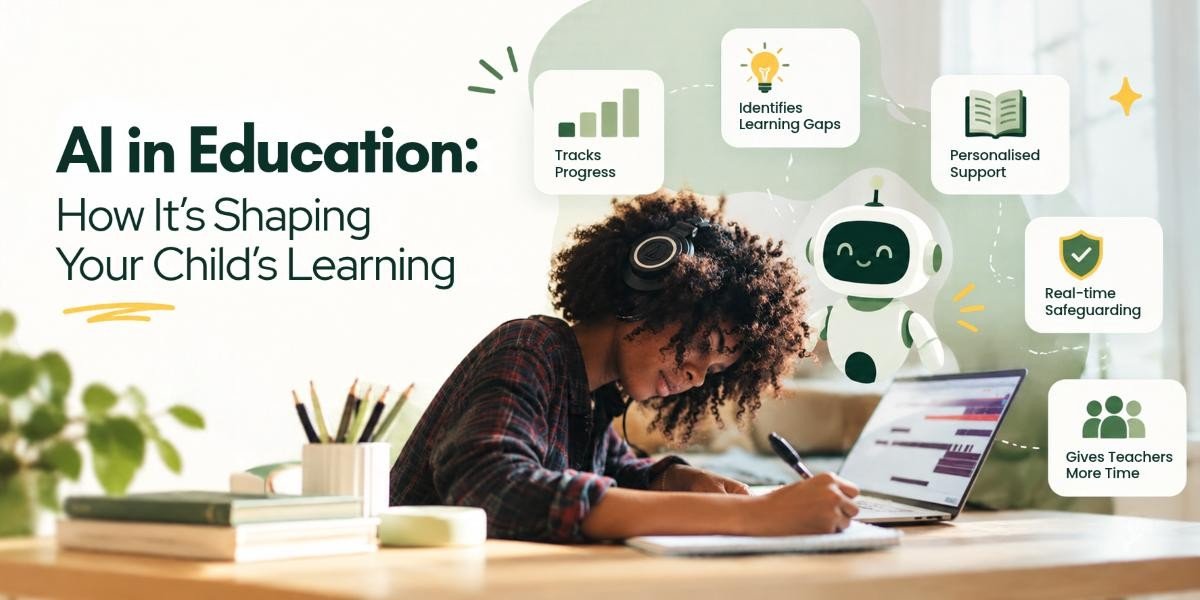
1. Learning Gap Detection: We don’t wait for a mock test or termly reports to detect learning gaps. Our system constantly monitors performance right from the very first week of a student's assessment so that a teacher gets alerted about any drop as soon as it occurs, not months later.
2. Real-Time Safeguarding: Because all our lessons are online, we have made safeguarding impossible to ignore. For example, our system detects potentially harmful behaviour in real time, including unsafe online interactions and inappropriate behaviour, which may go unnoticed in a regular classroom. Any such incidents are flagged directly to our Designated Safeguarding Lead (DSL), not to a general email address. At the same time, it also alerts a teacher if a student becomes more frequently absent, or less talkative than usual in lessons.
3. Flexible Learning Approach: As none of the students learns at the same pace, our flexible learning system adapts to the individual, not the cohort as a whole, so that a student who is ahead does not slow down, and a lagging student receives help, but without feeling isolated.
Where the wider industry is heading
Apart from the technology we use, there are two more things moving fast across UK education generally worth knowing about.
4. AI Tutors: It's worth clarifying this point, as this is not a chatbot helping a student write assignments. A great example here is the AI tutor, Skye, that guides a student to solve problems using explanations which are written and verified by qualified maths teachers. This tool is used by many schools such as Danegrove Primary School, Admirals Academy and St Raphael's Catholic Primary School in same-day catch-up and intervention lessons.
5. AI-Assisted Marking: Increasingly, many tools exist which can mark mock exams or class assessments according to actual mark schemes used by the exam board, reducing what used to be a very lengthy task to mere minutes. An example of such a tool is ExamGPT, which is used at institutions including Hampstead School, where the time saved and the depth of feedback provided have been highlighted by their staff. Just worth mentioning, any formal examination, be it GCSE, will still be marked by exam board examiners alone.
6. AI-Assisted Lesson Planning: Teachers make use of AI in helping them prepare lessons, quizzes, and classroom activities rather than creating them from scratch. According to an Education Endowment Foundation study, teachers who made use of Generative AI with guidance took 31% less time preparing Year 7 and 8 science lessons and resources without a noticeable decline in quality.
The DfE study also notes the use of AI in schools, including making revision materials. AI can assist in preparation, but teachers will have to verify the content and select what works for them.
That's a fair amount of ground technology is already covering in education, and where it's heading next. Here's what our Tech Head makes of it all.
"The blind spots in education have been the same for decades, the things that we knew were a problem all along, yet lacked any solution for them. A student who couldn't visualise or understand photosynthesis or asked why sin and cos matter outside of textbooks had to wait until someone could explain the topic from another angle. A learning gap was detected within a term, sometimes longer, before anyone took note. The difference is not in the teaching, but in the technology which finally gave us a chance to notice those things in time to be able to solve them, a gap detected within weeks instead of months, a concept presented rather than explained. AI is not replacing a teacher in both cases. It is only making the distance shorter between the problem and its detection."
- [Head of Technology & Business Growth, Kuldeep Singh]
Key AI Risks Every Parent Should Understand
None of this, of course, is without potential risk. Parents are correct to question before accepting more advanced technology equating to more provision.
Perhaps the most obvious risk is Data Privacy. When any system keeps track of how a student has performed and their habits and logins, it is holding data about that child. Our systems are all in-house specifically because we do not want to pass that sensitive information to a third party; we do not control ourselves.
A more subtle risk lies in Over-Reliance on systems. Overreliance occurs when a school believes that the technology will pick up all the problems and stops cross-checking it, considering a clear dashboard as an indicator that everything is fine, rather than just one source of information out of many. It is meaningless to have all the right information on the screen if a person stops seeing it because the system sees it for him or her.
There is a real danger associated with Generative AI, students using chatbots to do their homework or being exposed to AI-generated content such as deepfakes. This is now serious enough to feature within statutory safeguarding guidance, and we take it in the same way – as a safeguarding issue, not an afterthought.
The truth is that technology both raises the ceiling and the floor. It will either catch issues early on if used properly or create them if not used properly. The key factor here is whether the system is still controlled by a human being, which remains the non-negotiable core of Sprout philosophy.
To Conclude:
If you've felt uncertain about AI showing up in your child's education, that's a fair instinct, not something to feel behind on. The honest version is less dramatic than the headlines suggest: used properly, with a person still in charge of it, it's one of the plainer reasons a struggling student gets noticed in time, rather than months later. That's the whole idea, really. Not smarter than people. Just quick enough to catch what people alone sometimes miss.
If you have any questions or want to learn more about our safeguarding protocols or how our online system works, email us and we'd be happy to book a 1- 1 discovery call.